
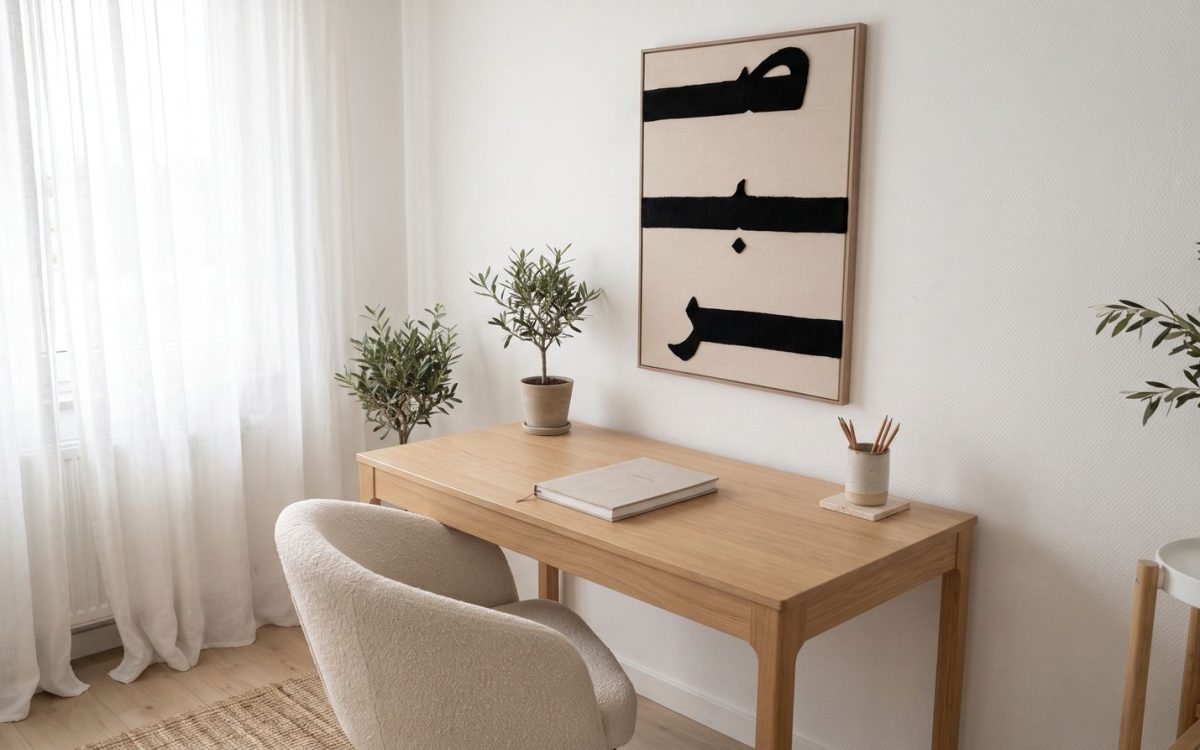
We hear it in all families, often at the worst moment: «Sabr, it will pass.» After a failure on an exam, a mountain of paperwork, a family illness, a bereavement. The word seems simple, almost resigned. In reality, sabr is one of the richest concepts in Islam, and one of the most present in the Quran.
What does sabr mean?
Sabr (Patience) translates as «patience», but the Arabic word goes further. It comes from a root that evokes the act of holding back, containing, and maintaining one’s composure. Sabr means to maintain self-control in the face of what is troubling us: not letting oneself be carried away by anger, not giving up, not losing trust in God.
This is therefore not passive patience; it is endurance, consistency, and a form of silent courage.
O you who have believed! Seek help through patience and prayer; indeed Allah is with those who patiently persevere.
«O you who have believed! Seek help in patience and prayer. Allah is with those who are patient.»
Quran, Surah Al-Baqara (2), verse 153 · translation of the meaning
The three forms of sabr
Scholars traditionally distinguish three forms of patience:
- Patience in obedience : getting up for the fajr prayer in winter, fasting during the long summer days, staying regular when motivation wanes.
- Patience in the face of prohibition Refrain from doing things that would be harmful, even when it is tempting or when everyone around you is doing it.
- Patience in the ordeal : accepting what we cannot change, without rebellion against God, while doing what is within our power.
For those who live their faith in a minority in Europe, the second and third places take on a special significance. It sometimes takes courage to remain true to oneself at work, in school, and in the eyes of others.
What the Quran says about patience
The sabr appears nearly ninety times in the Quran, according to the account attributed to Imam Ahmad. Some verses that many know by heart:
For with difficulty comes ease; indeed, with difficulty comes ease.
« Besides the difficulty, there is certainly also a certain ease. Yes, besides the difficulty there is also a certain ease.»
Quran, Surah Ash-Sharh (94), verses 5 and 6 · translation of the meaning
«And make the right announcement to the steadfast ones, who say when adversity befalls them: »We belong to Allah and to Him we shall return."
Quran, Surah Al-Baqara (2), verses 155 and 156 · translation of the meaning
This phrase, Inna lillahi wa inna ilayhi raji’un (To God belongs all praise and to Him we return.), it is pronounced when announcing a death, but also for smaller losses. It puts things in their place.
The Quran also promises an extraordinary reward: «The persevering will have their full reward without counting» (Surah Az-Zumar, 39, verse 10). And when the Prophet Yaqub learns of the disappearance of his son Yusuf, he responds with two words that have become famous: Sabrun Jamil (Beautiful patience), «a beautiful patience» (Sura Yusuf, 12, verse 18). He repeats it years later, when his other son, Binyamin, is held captive in Egypt (verse 83). A patience without complaint against God, without bitterness.
What the Sunna says
«The case of the believer is astonishing; everything that happens to him is a blessing, and it is given only to the believer. If he experiences joy, he thanks God, and that is a blessing for him. If he experiences misfortune, he endures it, and that is a blessing for him.»
Hadith reported by Muslim (2999)
This hadith relates two attitudes: the Thank you (Thanks), gratitude, and sabr. That is why «Sabr» and «Alhamdulillah» are so often associated: they are the two sides of the same trust.
«No one has received a gift better and more extensive than patience.»
Hadith reported by al-Bukhari (1469) and Muslim (1053)
The Prophet ﷺ also specified when patience counts the most: «Patience is at the first shock» (reported by al-Bukhari, 1283, and Muslim, 926). He said this to a woman who was crying over a grave and had pushed him away without recognizing him. In other words, true patience is the reaction in the first few seconds, not just the one that is found weeks later.
Ayyub, the model of endurance
The prophet Ayyub (Job) lost his health, his possessions and his children. He never ceased to invoke God: «Evil has touched me. But You, You are the Most Merciful of those who show mercy» (Sura Al-Anbiya, 21, verse 83). The Quran concludes: «We found him truly enduring. What a good servant! He was full of repentance» (Sura Sad, 38, verse 44). His story is often told to children to explain that patience always ends up being rewarded.
Why keep the word Sabr in sight
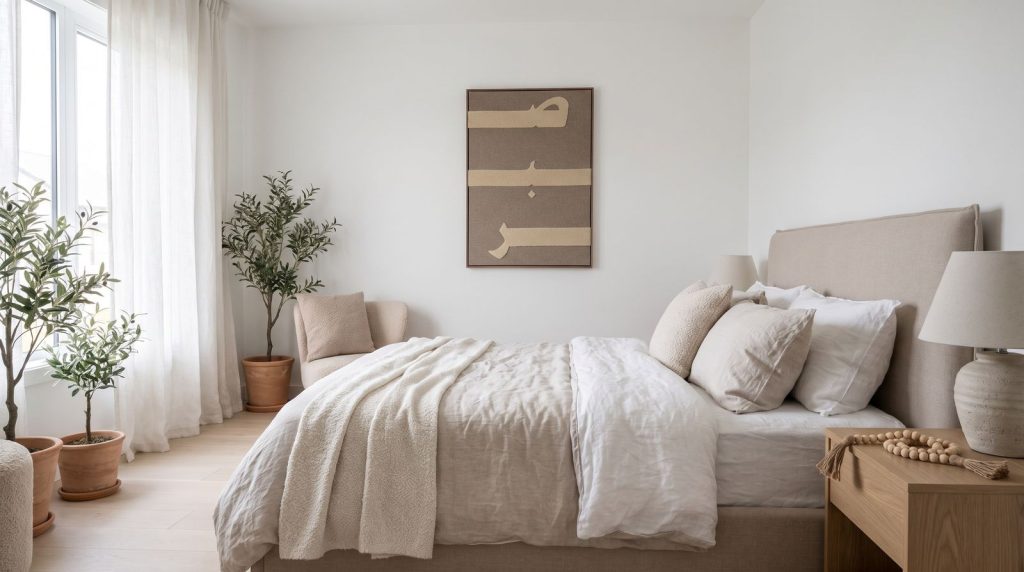
We don’t think about sabr when everything is going well. We need it when things speed up, and that’s exactly when we forget about it. A sign posted in a strategic place reminds us to breathe before reacting:
- In the office, On the screen, for busy days and annoying emails.
- In the room, For the nights when you keep circling.
- At the entrance, For difficult days of return from work and rushed mornings with the children.
- In a corner of revision, For students during exam periods.
The painting Sabr is also a delicate gift for someone going through a difficult time: it says «I am with you» without any pre-made words. It was put in our selection of meaningful gifts.
How to cultivate sabr every day
- The prayer. The verse directly associates it with patience: «Seek help in endurance and prayer.».
- The dhikr. SubhanAllah, Alhamdulillah, Allahu akbar, repeated after each prayer on the fingers or with a tasbih. One talks about it in our article about the salad corner.
- The entourage. The Surah Al-‘Asr (103) describes those who succeed as those «who enjoin each other the truth and enjoin each other endurance». Patience is also worked on in several ways.
- The decline. Remember that difficulty has an end: «next to difficulty is ease.».
The sabr is one of those words that are pronounced without even thinking about them. To discover others, read our guide daily Muslim words.


 Français
 Deutsch
 Nederlands
 English