
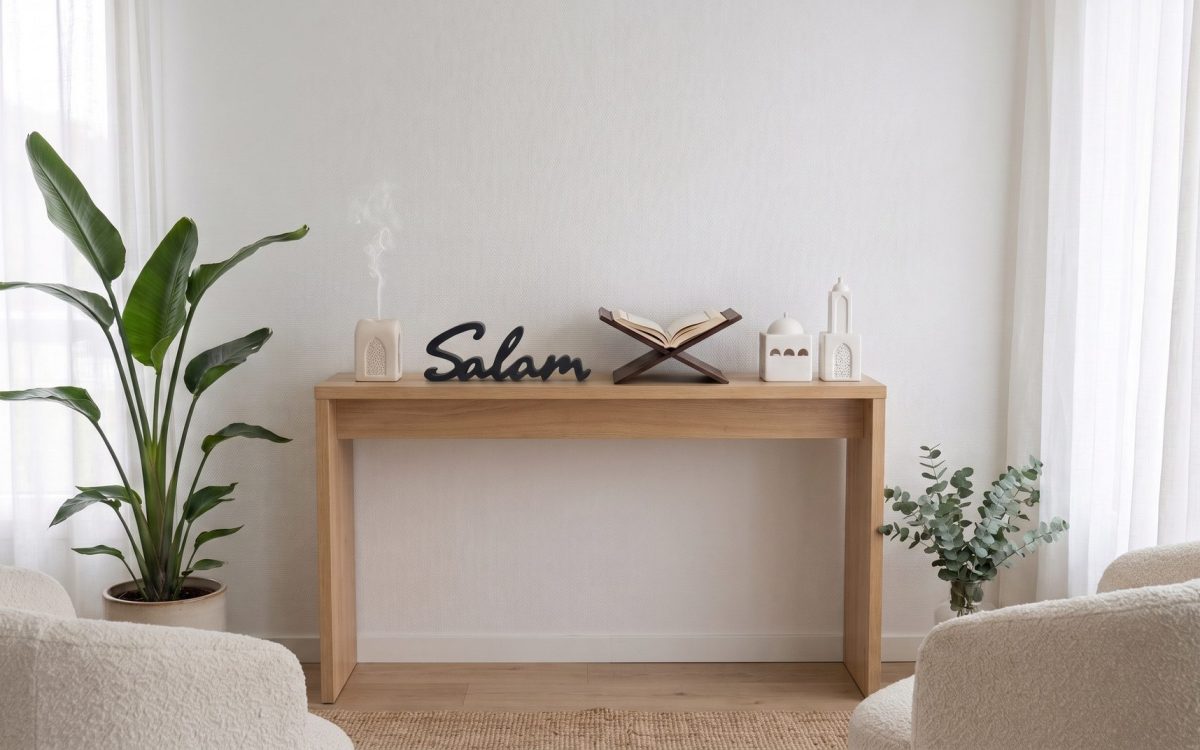
Back in the homeland, you knew it was Friday without looking at the calendar. The smell of bakhoor in the hallway, the ironed djellaba on the back of a chair, Dad leaving for the mosque a little early, the surah you could hear from the kitchen. In Europe, Friday is often a workday like any other. The atmosphere doesn’t come on its own anymore: you have to create it.
The good news: it takes very little. Here are 8 simple rituals to bring back a real Jumu’ah feeling at home, from Thursday evening to the prayer.
Why Friday is a special day
Friday, yawm al-jumu’ah (يوم الجمعة), is the “day of gathering.” It’s the day of the great congregational prayer, which replaces dhuhr for men at the mosque.
يَا أَيُّهَا الَّذِينَ آمَنُوا إِذَا نُودِيَ لِلصَّلَاةِ مِن يَوْمِ الْجُمُعَةِ فَاسْعَوْا إِلَىٰ ذِكْرِ اللَّهِ وَذَرُوا الْبَيْعَ
“O you who believe! When the call is made for the Friday prayer, hasten to the remembrance of God and leave off trade.”
Quran, Surah Al-Jumu’ah (62), verse 9 · translation of the meaning
According to the Prophet ﷺ, it is also the best day of the week:
“The best day on which the sun has risen is Friday: on it Adam was created, on it he entered Paradise, and on it he was expelled from it.”
Hadith reported by Muslim (854)
A special day deserves a home that shows it. For women, children and anyone who can’t go to the mosque, Friday is actually lived mostly at home.
1. Thursday evening: tidy up and get ready
Friday begins at sunset on Thursday. It’s the right time for a quick tidy-up: clear the surfaces, air out the rooms, change the bed linen if that’s your habit. A tidy home lifts everyone’s mood the next morning.
Get the outfits out too: a qamis, djellaba or gandoura for men and boys, a nice outfit for women and girls. The Sunnah encourages keeping special clothes for this day:
“There is no harm for any of you, if he can afford it, to keep two garments for Friday besides his work clothes.”
Hadith reported by Abu Dawud (1078) and Ibn Majah (1095)
2. The bath, the siwak and perfume
The full ritual bath, ghusl (غسل), is part of Friday. The Prophet ﷺ paired it with two other practices:
“The Friday bath is a duty for everyone who has reached puberty, as is the siwak, and he should apply perfume if he finds any.”
Hadith reported by al-Bukhari (880) and Muslim (846)
At home, you can make it a small ritual: clean towels, a siwak for everyone in a glass, a bottle of musk or scented oil on a bathroom shelf. Kids love having “their own” siwak.
3. Bakhoor, the scent of Friday
If anything brings back memories, it’s scent. The bakhoor (بخور), those fragrant wood chips burned slowly, is the scent of Friday in many families, from the Maghreb to the Gulf. Light it in the morning, hold your clothes over it, and the house keeps the fragrance all day.
Choose a stable burner, placed up high, away from curtains and out of children’s reach. A diffuser that also takes scented oils lets you switch to a lighter fragrance on weekdays.
4. A reading nook ready for Surah Al-Kahf
Reading Surah Al-Kahf (الكهف), “the Cave,” on Friday is a widely followed tradition:
“Whoever reads Surah Al-Kahf on Friday, a light will shine for him from one Friday to the next.”
Hadith reported by al-Hakim and al-Bayhaqi, authenticated by al-Albani
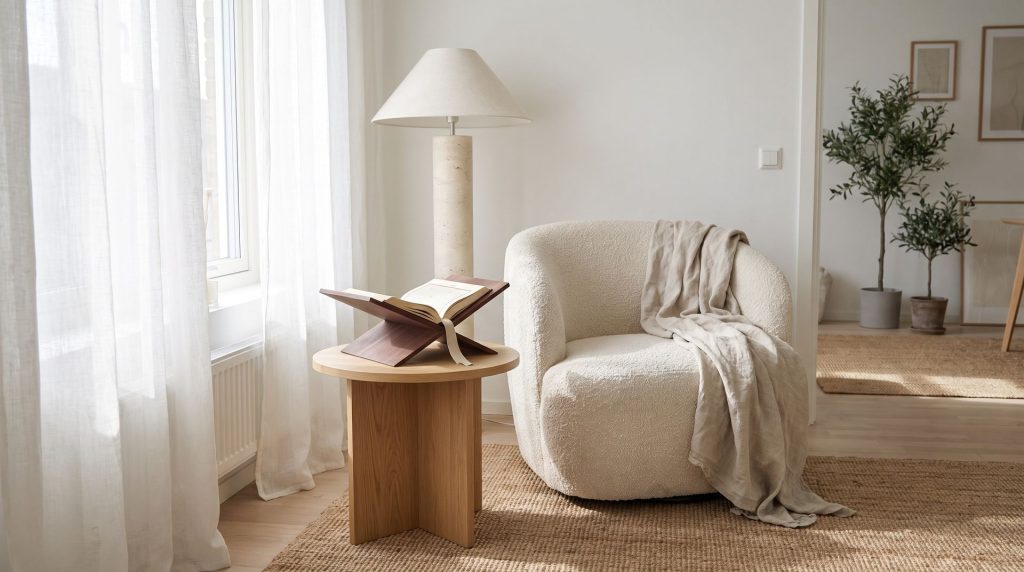
It is read from sunset on Thursday to sunset on Friday. So you don’t keep putting it off, leave the Quran open at the right page on a Quran stand (rahla), next to an armchair or in the prayer corner. A fabric bookmark, a light nearby, and everyone can read a few pages as they pass by. With several people, you can also share it: a quarter each, and the surah is finished in fifteen minutes.
5. A soft light on Thursday evening
On Thursday evening, after maghrib, switch off the ceiling light and turn on one or two soft lights: a lamp, a candle holder on a console table. It’s a simple signal for the whole family: the night of Friday has begun. Before long, the kids ask for it themselves.
6. Salawat and du‘a: the high point of the afternoon
Friday is the day to send abundant prayers upon the Prophet ﷺ:
“Among your best days is Friday. […] Send abundant prayers upon me on that day, for your prayers are presented to me.”
Hadith reported by Abu Dawud (1047) and an-Nasa’i (1374)
It also holds a special hour when supplication is answered (reported by al-Bukhari, 935, and Muslim, 852). According to another hadith, it is sought in the last hour after ‘asr (reported by Abu Dawud, 1048). It’s a lovely moment to set aside as a family: ten minutes before maghrib, everyone makes their du‘a, and the little ones say theirs out loud.
7. Welcome those coming back from the mosque
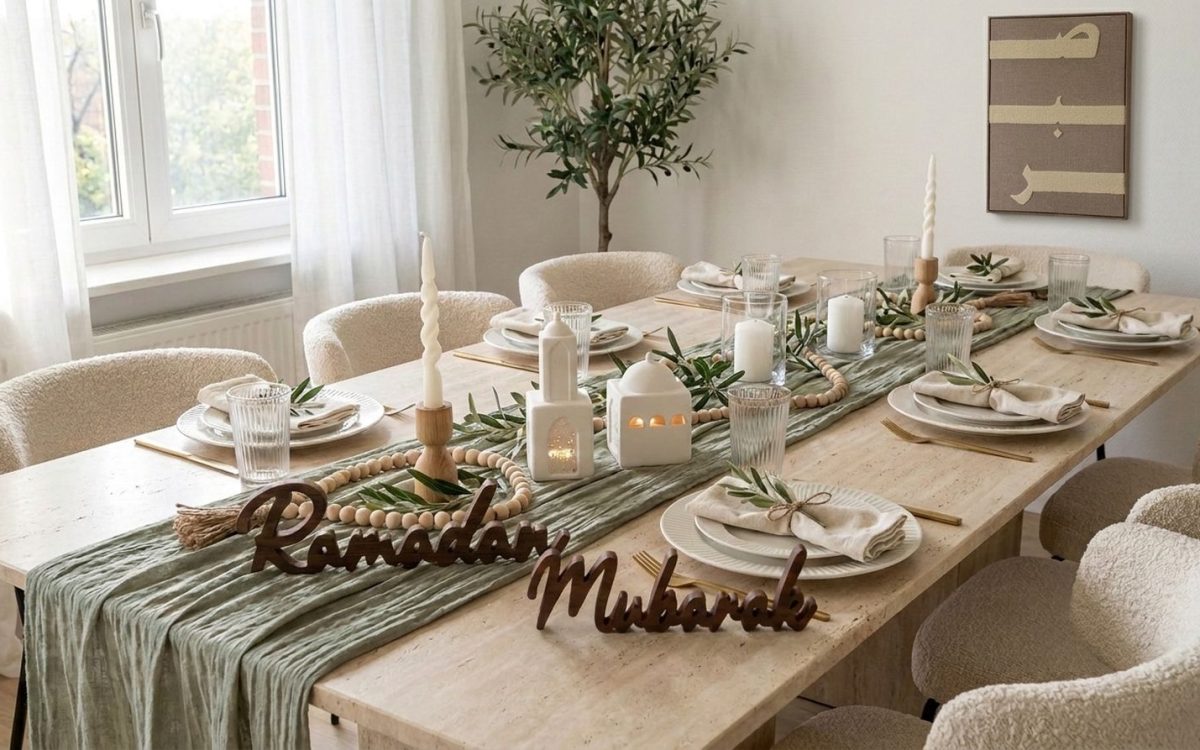
Coming home from Jumu’ah is a moment worth caring for. A tidy entryway, shoes in their place, a “Salam” on the wall as a reminder of the greeting we say when we come in. The big Friday meal, if your family keeps it, is served at a simply set table: a linen tablecloth, cloth napkins, a wooden bead garland in the middle.
8. A small routine for the kids
What lasts are the habits. A few ideas that are easy to keep up:
- Thursday evening: they pick their outfit for the next day.
- Friday morning: they hold their clothes over the bakhoor.
- Friday afternoon: a page of Al-Kahf or a story from the surah (the people of the cave, Musa and al-Khidr, Dhul-Qarnayn).
- Before maghrib: everyone makes a du‘a.
Friday at home, at a glance
| When | Ritual | What helps |
|---|---|---|
| Thursday evening | Tidy up, get the outfits ready | A soft light switched on after maghrib |
| Friday morning | Ghusl, siwak, perfume | Bakhoor burning, clothes scented over it |
| All day | Surah Al-Kahf | An open Quran on a Quran stand |
| Midday | Jumu’ah at the mosque, dhuhr at home | A prayer corner that’s always ready |
| After ‘asr | Salawat and du‘a | Ten minutes as a family before maghrib |
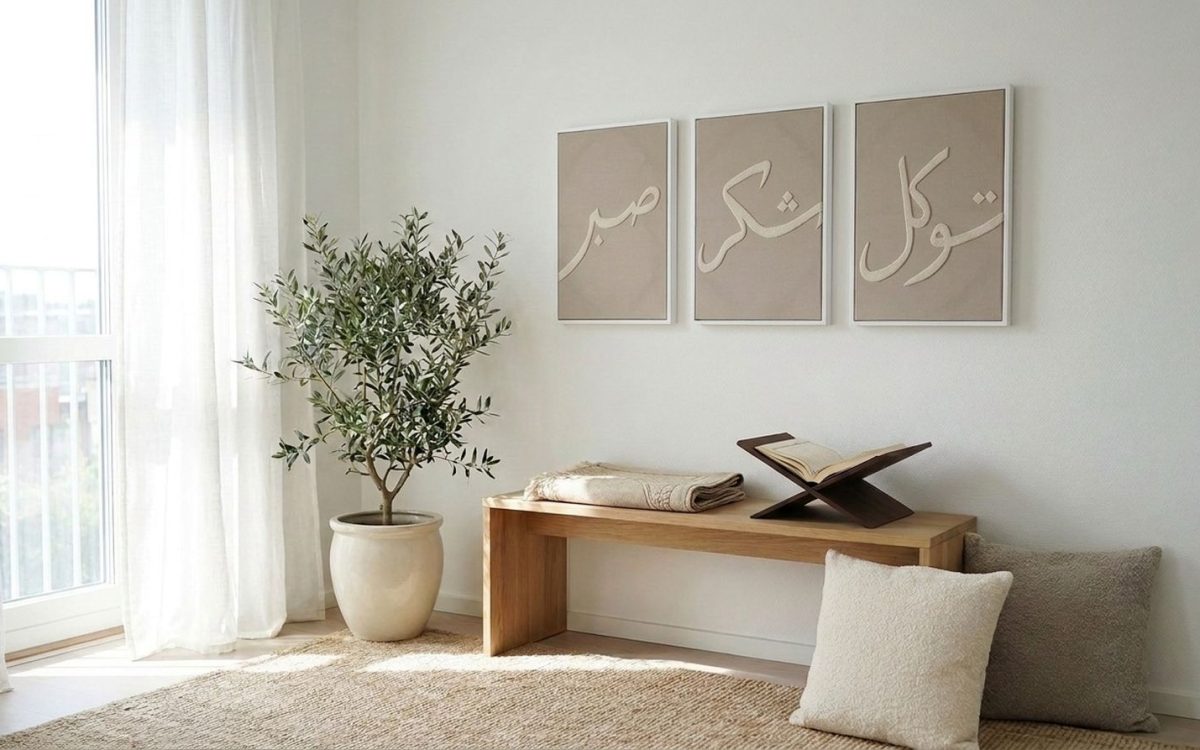
To set up the place where you pray, read our guide to the prayer corner at home. And for the meaning of the words we say on this day, our article on everyday Muslim words covers Bismillah, Alhamdulillah and Salam.
 Français
 Deutsch
 Nederlands
 English